
3D - MUSEUM
Apr 21, 2026V&A East Museum: showcasing design’s power to drive social change
V&A East is a bold extension of the Victoria and Albert Museum (V&A), a world-renowned museum for its collections of applied and decorative arts and design.
Located in Queen Elizabeth Olympic Park, which has been transformed into a post-Olympic cultural district, the V&A East is spread across two spaces: the Storehouse, a public storage facility with an innovative on-demand viewing system, and the V&A East Museum, which is more traditional in form, featuring two galleries of free permanent exhibitions.
To encourage the sensory exploration of key elements in these new galleries, Tactile Studio designed and produced orientation maps and multisensory stations.

Why We Make?
The two galleries, entitled ‘Why We Make’, bring together over 500 objects from the worlds of art, architecture, design and fashion. They create a dialogue between older and more recent works on major issues in contemporary culture, centring on wellbeing, creative communities, social justice and environmental action.

Two galleries, eight tactile information points
Making it easier to find your way around the gallery
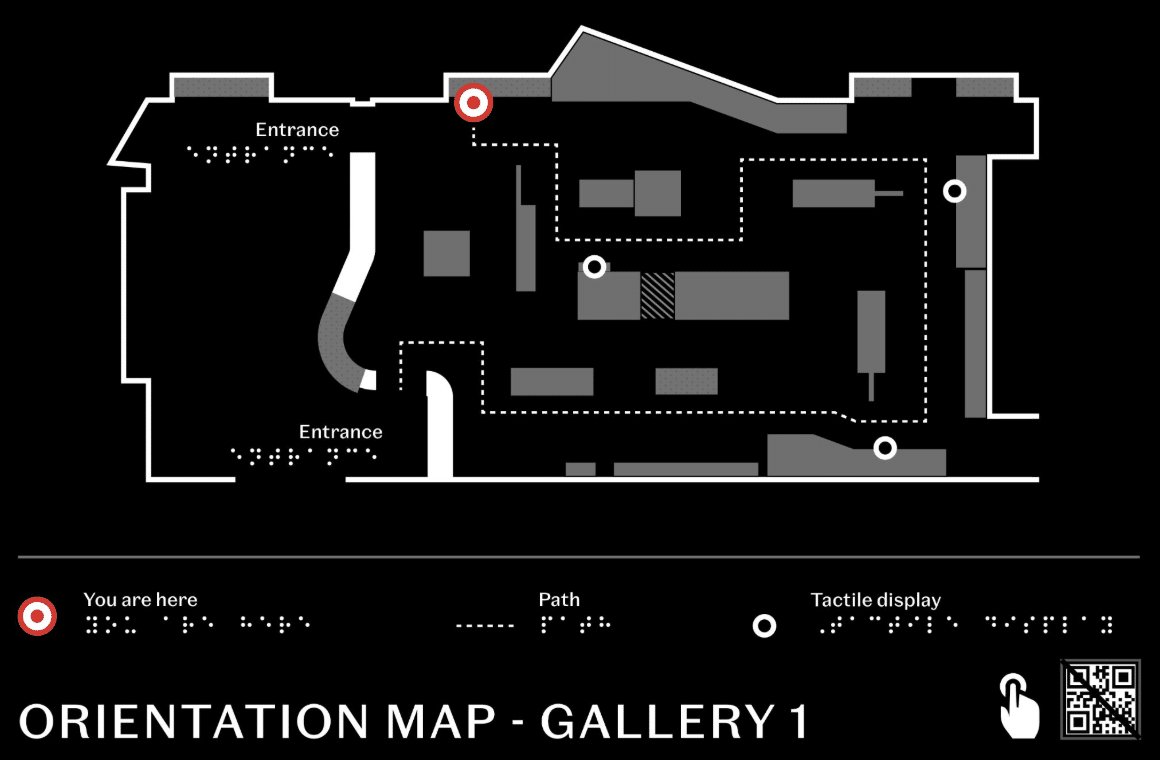
Each gallery is equipped with a map that allows visitors, as soon as they enter, to locate (by sight, touch and/or sound) the gallery’s points of interest – particularly the multisensory installations – and to plan their route in advance. A prototype version of this map was tested to ensure the information was clearly legible and effectively highlighted.
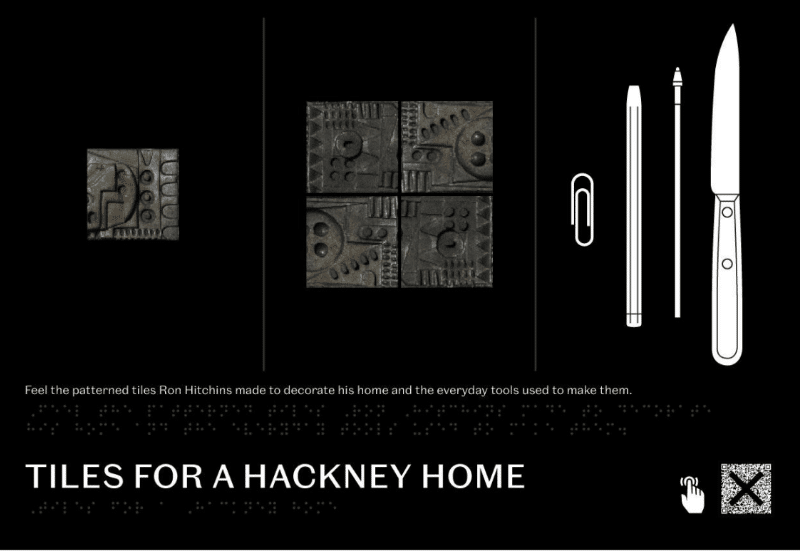
Touching Ron Hitchins’ tiles
This 20th-century British sculptor is known for covering the walls of his home with terracotta tiles that he produced using everyday tools. A multi-sensory station allows visitors to discover his art through a tile replica displayed on its own to appreciate its size; a tactile exploration of an arrangement of four replicas forming a square; and tactile illustrations of the everyday objects (knives, paper clips, Bic pens) used by the artist.
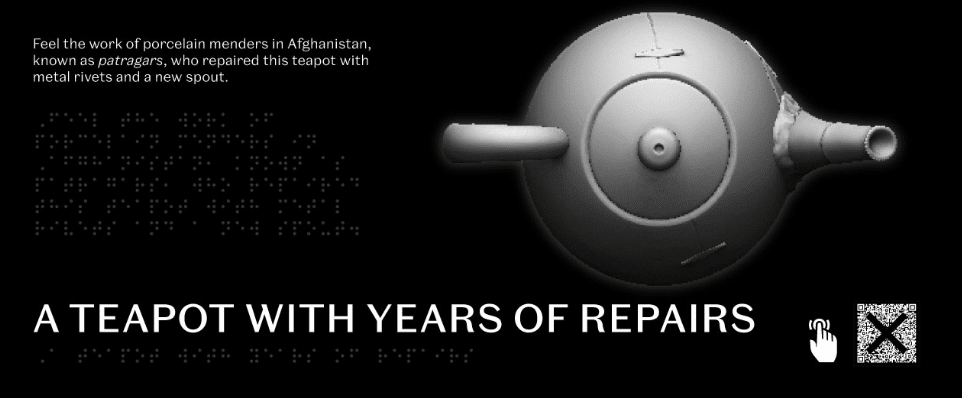
Extending the life of teapots
This sensory station allows visitors to appreciate how, in Afghanistan, the life of porcelain teapots is extended through traditional craftsmanship.
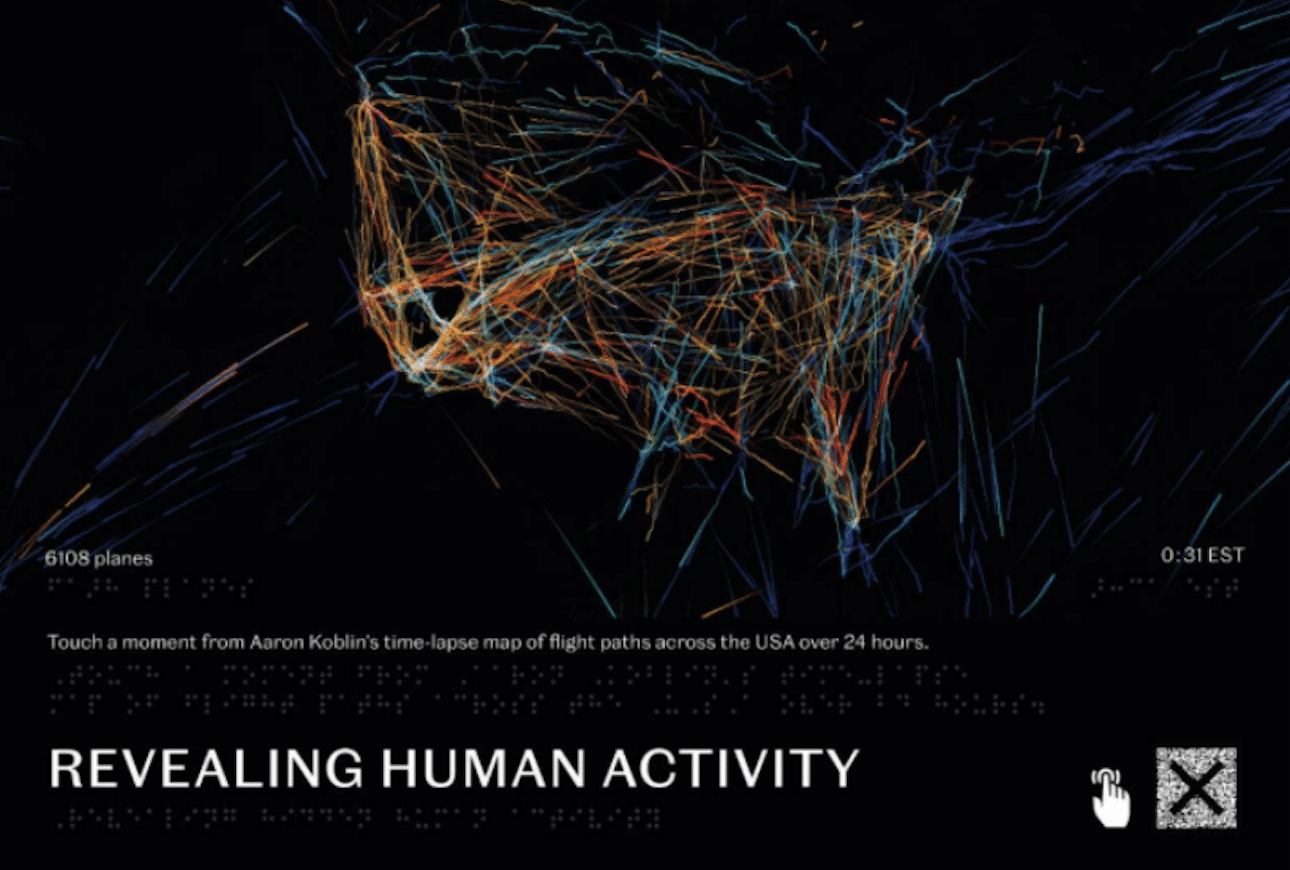
Highlighting the increase in air traffic
This tactile image is an interpretation of Aaron Koblin’s digital work ‘Flight Patterns’. Using data provided by the Federal Aviation Administration on flight paths in North America over a 24-hour period, the artist aims to make the increase in traffic visible.
Learn more about V&A East Museum
◉ Museum website: here
Sorry, the comment form is closed at this time.